
Do you know what it takes to create a product people actually enjoy? A well-defined UX design process. It will not only help you understand your users but also guide you in building intuitive and effective solutions.
In this article, we’ll walk you through the key stages of the UX design process and how each step helps create better user experiences.
What is the UX Design Process?
A UX design process is an approach used to create products that are easy to use, efficient, and enjoyable for users. It basically outlines various steps you need to take in order to understand user expectations and solve their problems.
While this is a flexible and non-linear process, it typically involves these 6 stages:
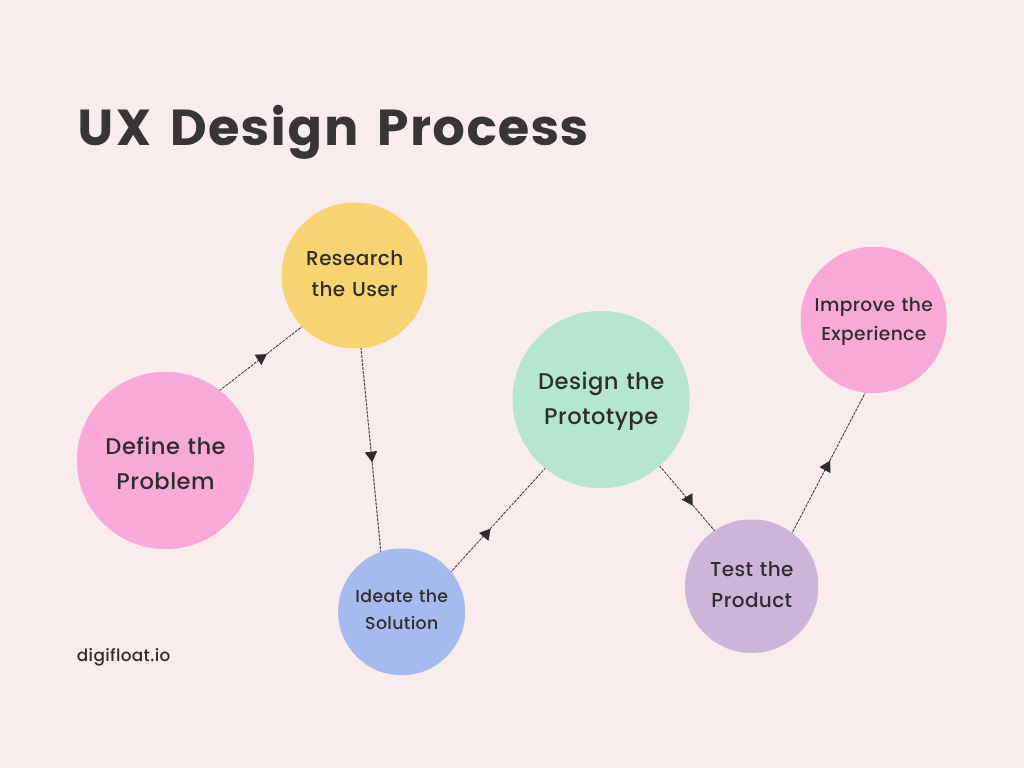
Let’s explain each of these in detail.
1. Define the Problem
Before designing, you need to understand what you are designing. Why does this product need to exist in the first place? This discussion usually takes place between stakeholders to better align the business goals, user needs, and the core problem the product aims to solve.
This is also a stage where you would need to outline key objectives just to ensure everyone on the team is working toward the same outcome.
2. Research the User
Then comes the research, the most important part of the entire UX design process. It’s usually split into 2 parts – user research and market research. The former helps uncover the needs, behaviors, pain points, and expectations of the users, while the latter aims to understand the competitive landscape and industry trends.
There are various ways to go about this, including:
- Focus groups: A moderated discussion with a small group of target users. It helps gather opinions and reactions around a product.
- User interviews: One-on-one conversations with users to understand their frustrations, habits, and demands.
- Field studies: Observing users in their natural environment while they complete tasks. This helps uncover real-world behaviors, workarounds, and challenges.
- Diary studies: Asking users to record their thoughts, behaviors, and experiences in a diary over a set period of time.
- Surveys: Collecting feedback from a larger audience via online forms or paper surveys. It helps analyze preferences and common trends.
- Five-second testing: Users are shown a design for five seconds and then asked what they remember. This helps test first impressions.
- A/B testing: Two versions of a design are compared with real users to see which performs better based on metrics such as clicks, conversions, or engagement.
- Usability testing: Users attempt tasks using a product or prototype while researchers observe where they succeed, struggle, or become confused.
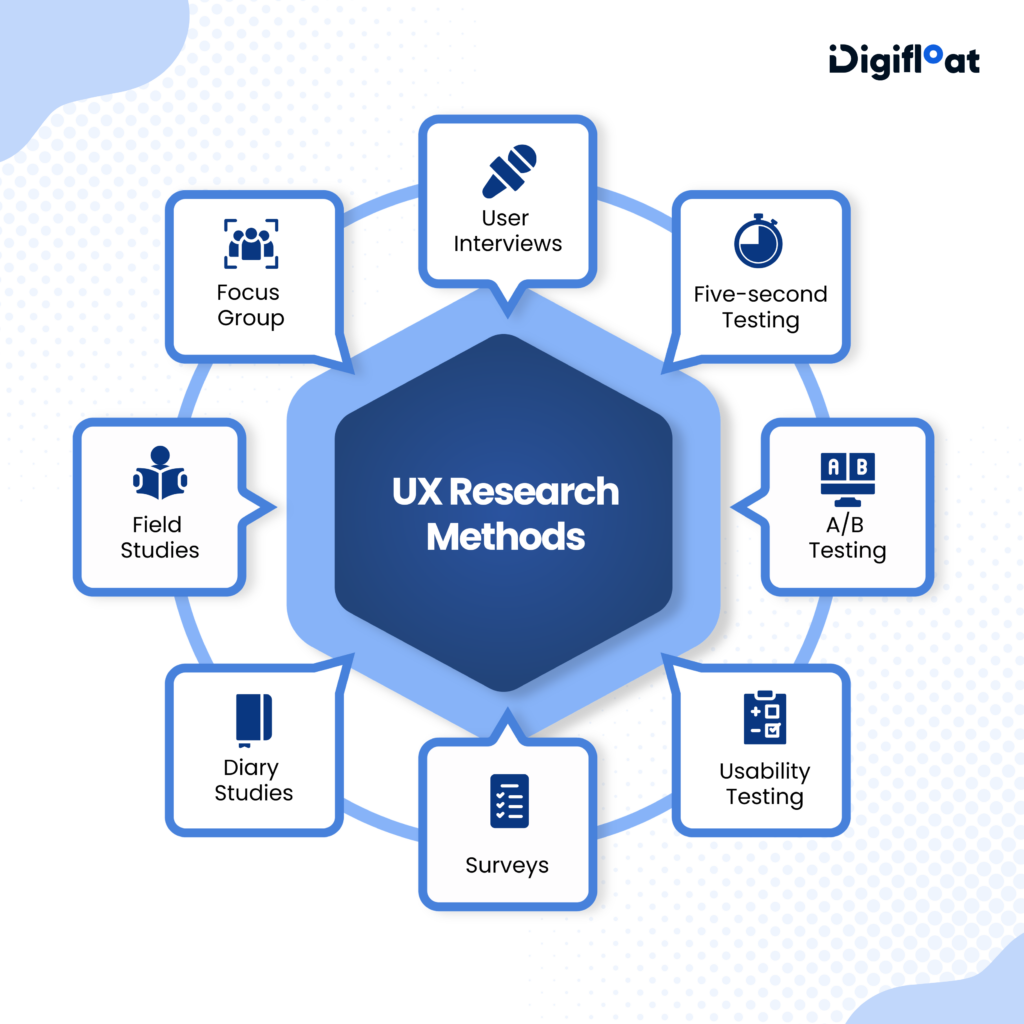
Every method has its strengths and limitations. You can pick and choose according to your project goals and timeline. You can also use this information to then create user personas and customer journey maps.
3. Ideate the Solution
Now it’s time to use the insights gathered during the research process to shape the right solution. This is where ideas start to take shape. But you are still not creating the final product; instead, the goal is to explore different ways to solve the same problem rather than jumping to the first solution.
For example, imagine you’re designing a checkout flow for an e-commerce app. If the problem is that users are dropping off before completing their purchase, then you would explore multiple solutions, including:
- reducing the number of steps required at checkout,
- adding a guest checkout option, or
- showing a progress bar to indicate how many steps are left.
This is how you can identify the most effective solution and proceed with confidence into the actual design phase.
4. Design the Prototype
Now comes the stage where you need to create something tangible that can be seen and interacted with. This step will help you test your ideas and visualize the experience before moving into full-scale development.
The process typically starts with low-fidelity wireframes created using tools like Figma, Balsamiq, or UXPin. They just define the basic layouts with content placement and user flow. If everything looks good here, you can move on to creating prototypes by adding more visual details that resemble the final product.
5. Test the Product
Once the prototype is ready, it’s time to start testing it with real users. This allows you to understand how people are interacting with the product, whether they are able to complete their desired actions, or if they face friction along the way.
There are various methods to perform this test, such as moderated test groups, A/B testing, user interviews, guerrilla testing, and analytics tracking. All of these help uncover usability issues at various stages in the product development.
6. Improve the Experience
This last step is a part of an ongoing process. At first, you will take the insights gathered during testing to refine and improve the overall experience. Then, as users continue to interact with the product, new feedback and data help identify further areas for improvement. This leads to continuous iteration and optimization over time.
How to Implement a UX Design Process?
Having a good UX design process in place is not enough; you also need to figure out how to implement it effectively. Below are 5 tips that can help:
1. Set Clear Goals
Always start by defining what you want to achieve and make those goals specific and measurable. This will not only help your team stay aligned but also track progress consistently.
2. Break the Process Into Stages
We highlighted the 6 broad steps in this article. But you should further divide them into smaller, manageable tasks based on your project needs. This will make it easier to follow and ensure nothing gets overlooked.
3. Collaborate Across Teams
The UX design process involves many people, including stakeholders, the marketing team, and even customer support. It’s not something that happens only between designers and developers. So make sure you are collaborating with everyone and not building a product in isolation.
4. Use the Right Tools
The right tools can make or break the entire UX design process. Therefore, it’s important that you do your research and find the right solutions for every step.
5. Keep Iterating
UX design is never a one-time task. Once your product is live, you need to continuously improve it based on user feedback and data. This ensures that the experience keeps evolving to meet user needs.
Summing Up: UX Design Process
The UX design process is all about creating products that truly work for users. It’s not a rigid framework but a flexible approach that evolves with your product. The best way to successfully implement is by prioritizing user needs, testing your ideas early, and continuously refining the experience based on feedback.
And when it comes to the design part, you can delegate the tasks to Digifloat. Our graphic design subscription gives you access to a team of professionals who can handle everything from wireframes to high-quality visuals. Just sign up to get started.

0 Comments