
Branding is one of those words that’s everywhere these days. You’ll hear it in podcasts, see it on social media, and read it in every marketing blog. And while this might feel like just another buzzword, it’s actually one of the most powerful tools for building a business.
So now the question is, how do you get started with small business branding? Let’s break it all down in 8 simple, powerful tips.
Branding Tips for Small Businesses
- Focus on Your Unique Strength
- Build a Personal Brand
- Prioritize a Memorable Identity
- Engage with Your Community
- Collaborate with Local Voices
- Incorporate User-Generated Content (UGC)
- Use Micro-Storytelling
- Play the Long Game
We have discussed each of these small business branding tips in detail below.
1. Focus on Your Unique Strength
You are a small business, and you do not need to compete with large corporations on scale and speed. Instead, focus on what you can do better and more efficiently.
For example, a local bakery is known for its freshly baked bread and personalized service. It does not have to rival Starbucks in terms of menu variety or nationwide reach. The real charm lies in the quality, care, and community it builds every single day.
Here’s how Coffi Lab, a coffee brand with a unique dog-friendly identity, makes it happen:
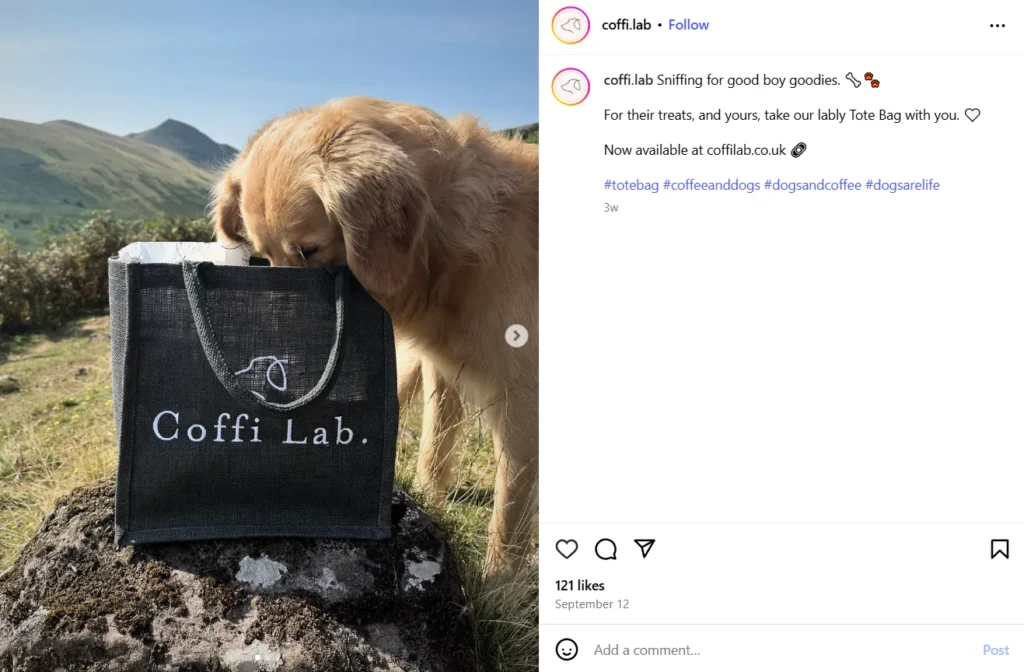
You need to find the advantage of your business. It could be your attention to detail, handcrafted quality, or the personal connection with customers. Then you’ll use this to shape your small business branding and make sure every interaction reflects what sets you apart.
It doesn’t mean you force a personality or start lowering your price. You still need to reflect your values and account for the overall costs. If you’re unsure how to find that balance, get a closer look at how to price your product and how to price your service.
2. Build a Personal Brand
Marketing your business is crucial, but so is marketing yourself. It’s a new age of branding where customers connect with people, not just products. Your personality, story, and values can be just as powerful as your offerings.
You can start by sharing your story or just some behind-the-scenes moments on your social media platforms. It’s also ideal to create separate profiles for your personal brand so you can showcase your personality without mixing it with purely business content.
Tip: Read our guide on how to build a personal brand to get started.
3. Prioritize a Memorable Identity
Being memorable means staying on top of people’s minds. It helps your business stand out in a crowded market and makes customers more likely to choose you over competitors. Now, how do you stay memorable?
The key is your visual elements and messaging. Our brains love visuals, and if you create a consistent, recognizable look paired with clear, authentic messaging, your brand will stick in people’s minds.
4. Engage with Your Community
Engaging with your community involves creating two-way conversations between you and your customers. It doesn’t have to be grand; in fact, even small gestures like replying to messages or featuring customer photos can make a huge difference.
For example, a bookstore can partner with a local bakery to create a “Books & Bites” event, where customers enjoy fresh pastries while exploring curated book selections. If you're creating holiday marketing strategies, you can even create seasonal bundles with other businesses.
5. Collaborate with Local Voices
On the same note, engagement doesn’t have to stop at one-on-one conversations – it can extend into partnerships. You can collaborate with local businesses, creators, or influencers to strengthen your brand identity.
For example, a bookstore can partner with a local bakery to create a “Books & Bites” event, where customers enjoy fresh pastries while exploring curated book selections.
You can also take things a step further by exploring opportunities specific to your niche. For example, if you're an author looking for how to design a book cover, you could connect with a local designer familiar with your genre and target audience to create a cover that appeals to your readers.
6. Incorporate User-Generated Content (UGC)
A single piece of user-generated content will be worth so much more than your branded content. It’s because we tend to trust authentic experiences of other people far more than polished ads.
Therefore, you need to encourage UGC, whether it comes in the form of photos, reviews, videos, testimonials, or social media posts. You can then feature these (with permission) on your social media, website, or even packaging.
Here’s how we showcase our client’s testimonials:
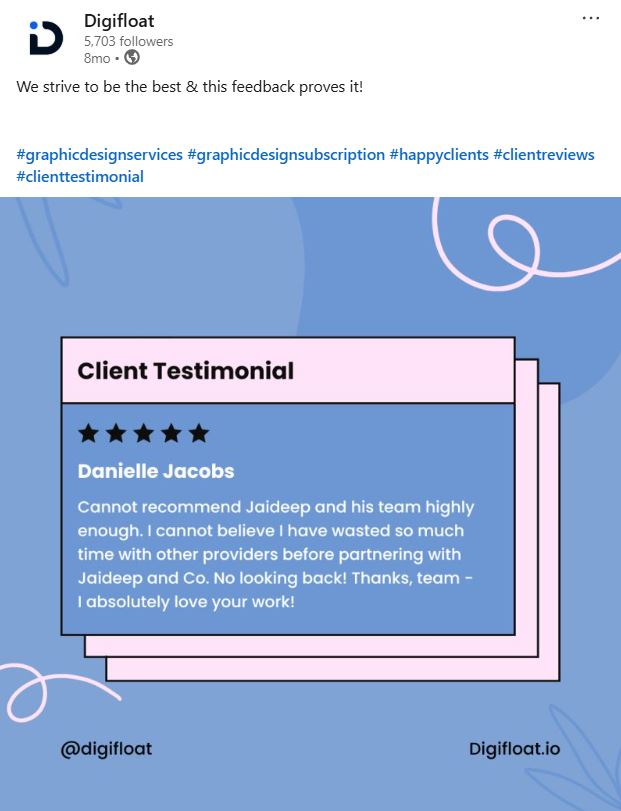
This step will not only strengthen your branding strategy for a small business but also make the existing customers feel valued and part of your story.
Want to see how other brands are putting UGC to work? Look at our Smartalto case study and Marketing Examples growth journey.
7. Use Micro-Storytelling
Talking about stories, these are a big part of small business branding. However, most people find them intimidating. So a simpler approach is micro-storytelling. It’s about sharing short, authentic moments that connect your audience to your brand without overwhelming them.
These can be quick snapshots of how you create a product, behind-the-scenes clips, customer moments, or just a photo that captures the early days of your business. These tiny stories build emotional connections and are more engaging because they feel real.
8. Play the Long Game
Last, and perhaps our most important tip in branding for small business is to play the long game. It doesn’t matter what you do, success won’t come overnight or by a single post. You need to put in consistent effort, nurture your audience, and stay true to your brand values so that over time, your business grows a loyal following and a strong, lasting identity.
This also goes to say that you should avoid chasing trendy gimmicks or flashy campaigns that don’t align with your brand’s core values. Instead, focus on steady, meaningful actions (like all the ones we suggested above) to build a reputation that lasts.
Summing Up: Small Business Branding Strategies
Branding is hard, and it’s even more challenging when you are a small business with limited resources. But it pays off well. So, start small, stay consistent, and keep putting your customers at the heart of your brand. Over time, your efforts will transform into a brand identity that stands out and grows with your business.
When it comes to the visual side of your branding, we’re here to help. We offer graphic design services for small businesses that cover everything from logo design and brand guidelines to social media graphics and marketing materials. Just sign up and get a dedicated design team for a fixed monthly fee.




0 Comments